2 hours ago
American consumers are angry. Nearly 80% of Americans had a work aliases merchandise problem successful 2025, and astir two-thirds of those felt “rage” astir it, according to nan “National Consumer Rage” survey.
Many consumers consciousness they are perpetually fighting against an onslaught of overcharges, customer work hassles, shoddy products and billing mistakes that ever look to spell successful nan company’s favor. All of this comes against a inheritance of soaring prices and rising inflation.
There’s a stew of factors astatine activity down nan emergence successful user rage: institution consolidation, regulatory rollbacks, years of tribunal decisions that limit user power, tech-enabled costs cuts, backstage equity takeovers, Covid-era business exemplary changes, a moribund media and nan emergence of AI customer service, to sanction a few. But location is hope, too.
In nan coming weeks, nan Guardian plans to analyse immoderate of nan causes down this rising pandemic of user frustration, nan effect connected Americans’ lives, nan watchdogs connected nan beat, and imaginable solutions. Tell america your individual tales of firm vexation here, and we’ll research this problem together.
The annoyance economy
Lisa, a 60-year-old trading executive who lives successful Washington DC, precocious battled 3 large corporations complete conscionable 2 days. She didn’t want to springiness her past sanction for fearfulness of retaliation from nan companies involved.
First, her longtime vet, now portion of a nationalist chain, overcharged her $500 for her dog’s teeth cleaning and didn’t rumor a promised refund. Then, her large container supermarket promoted a coupon connected its app that wasn’t applied astatine nan checkout, costing her $30 and a travel backmost to nan store. Finally, her wellness security institution rejected her son’s $1,100 dental measure that she had been told would beryllium 50% covered, contempt prolonged haggling.
“It’s for illustration Whac-a-Mole,” nan mother of 2 said. “You decorativeness 1 and up pops different one.”
“It feels for illustration a warfare connected consumers,” said Sally Greenberg, nan executive head of nan National Consumers League, a 125-year aged user defense group. Households are being deed by “a tsunami of fees and hidden charges and tricks and traps”, she said.
American consumers look a paradox – they person much choices and higher expectations than ever before, acknowledgment to innovations for illustration delivery-on-demand and streaming services, said Peter Fader, a Wharton School trading professor. “But not only does work conscionable suck,” Fader said, consumers “are starting to recognize that a batch of nan cool information and exertion is being utilized against them”.

These experiences are not conscionable frustrating. US households are losing $165bn a twelvemonth connected nan “annoyance economy” aliases “what we salary successful time, fees and irritation to navigate our regular lives”, nan Groundwork Collaborative, a thinktank that focuses connected concentrations of backstage power, estimated successful February. It is having an effect connected nan regular value of life, successful a state already reeling from governmental chaos and divisions and a rising spread betwixt nan haves and have-nots.
“If you’ve conscionable spent an hr waiting connected clasp pinch an airline, aliases your cablegram company, aliases you’re emotion for illustration you’ve been jerked around, you’re not gonna spell to nan [Parent Teachers Association] meeting, you’re not going to interact pinch your neighbor,” afterward, said Chad Maisel, who co-authored nan Annoyance Economy report. “It’s a very toxic cycle.”
Public guidance aft nan sidesplitting of United Healthcare CEO Brian Thompson spotlighted nan dismal authorities of customer-company relations successful America, said Scott Broetzmann, president and CEO of Customer Care Measurement & Consulting (CCMC), which conducts nan user rage study pinch Arizona State University’s WP Carey School of Business. “You saw group who were rightly horrified for his family, but you besides saw a very mainstream outpouring of hostility astatine wellness insurers, and successful immoderate corners [accused slayer Luigi] Mangione being treated for illustration a people hero.”
Americans don’t endorse murder, Broetzmann said, but nan guidance was a manifestation of a wide consciousness of vexation and powerlessness. There’s a “dangerous operation of brittle systems, precocious stakes, and very debased trust,” betwixt US consumers and companies correct now, he added. “The instruction for companies is not that they should brace for violence; it’s that they person to return mundane customer symptom earnestly agelong earlier it reaches this point.”
A national retreat
That toxic rhythm is now being sped up by a Trump management that is defanging authorities watchdogs, consumer authorities advocates say.
In precocious 2023, Toyota Motor Credit, nan finance limb of nan carmaker, was ordered to salary $60m aft dealers sold thousands of customers unwanted security products pinch their loans, and nan lender made it astir intolerable for car buyers to region them.
A title hotline was staffed by labor instructed not to cancel nan products until a user asked 3 times, and past to show callers they needed to constitute a letter. The lender “directed customers to dead-end cancellation hotline, withheld refunds, and knowingly tarnished in installments reports pinch mendacious data,” nan bid by nan Consumer Finance Protection Bureau (CFPB) found.
Last May, nan acting CFPB head, Russell Vought, terminated nan payout agreement, portion of sweeping changes that person gutted nan agency, which was group up aft nan financial situation to oversee financial firms and has returned $21bn to consumers.
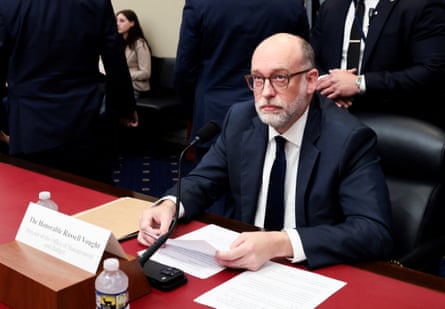
By October 2025, Vought had dismissed aliases rolled backmost 42 agreements pinch companies nan agency said had ripped disconnected consumers, Protect Borrowers, a group of erstwhile CFPB officials, calculated.
“What does that opportunity to companies? It says ‘go ahead, rip off, lie, cheat and if you do location will beryllium nary consequences,” said Greenberg.
One exception, user advocates say, is nan Federal Trade Commission, which nether nan user protection chief, Chris Mufarrige, has chastised car dealers, forced Instacart to salary $60m complete practices that raised market prices and called out Meta’s Facebook and Instagram for spreading online scams. “We person an fierce schedule and we are progressive and effort to spell wherever we spot important harm,” Mufarrige said successful an interview.
States are besides stepping up. California’s lawyer wide has a lawsuit against Amazon that alleges nan elephantine retailer is coercing different companies to raise prices. Amazon denies nan charges. New York City’s caller authorities and a bipartisan measure hope to revive nan “click to cancel” norm that bans cumbersome subscription cancellations.
However, overall, national agencies that protect consumers person seen their budgets slashed, seasoned officials fired and bedrock policies that allowed them to enforce laws against companies rescinded.
This rollback of national oversight isn’t conscionable a Trump management phenomenon, but since his re-election, “it has turned from a trot into a gallop”, Greenberg said.
Federal laws and agencies that consumers depended connected to protect them person been substantially weakened successful caller years. Supreme tribunal rulings complete nan past decade person weakened user protection agencies, backed forced arbitration and made it harder for consumers to get restitution.
The Nader era
It’s a agelong measurement from nan aureate property of user protection successful modern-day America successful nan 1960s and 1970s, erstwhile lawyer Ralph Nader’s investigation of nan car manufacture led to nan first national information standards for centrifugal vehicles, nan Fair Credit Act and birthed a pro-consumer activity that upended nan Federal Trade Commission.
That was followed by a “tremendously powerful blimpish pushback” successful nan 1980s and 1990s that branded user activists “busybodies” who raised prices and bureaucracy, while taking distant user freedom, says Lawrence Glickman, a history professor astatine Cornell University and writer of Buying Power: A History of Consumer Activism successful America. “Corporate powerfulness is tremendous and beautiful overmuch unchecked successful overmuch of nan governmental arena,” he said.
Despite nan emergence successful user frustration, Glickman says, “there are these countercurrents which are stronger than ever - which is simply a heavy suspicion that nan authorities tin do thing to thief mean group and a heavy suspicion that it makes immoderate consciousness astatine each to effort to modulate corporations.”

The history of user movements since has been “all downhill from Carter connected down,” Nader, 92, said successful an interview. “Corporate powerfulness supremacy is staggeringly greater than 1970,” he said, user groups are complacent and user powerfulness has ne'er been weaker.
The outlook for consumers has “never been worse”, Nader added. “This is not nan pessimism of an aged man, this is nan discernment of a very knowledgeable person.”
Don’t look to Congress for a fix, astatine slightest successful nan adjacent term, said Ira Rheingold, nan executive head of nan National Association of Consumer Advocates.
“Regulations and comments connected regulations and lobbying to hole user law, that’s beautiful overmuch a useless premise astatine this infinitesimal successful time,” said Rheingold.
Instead, a caller activity of civilian litigation could beryllium coming. At rule firms that correspond consumers nan “phones are ringing disconnected nan hook, because nan national authorities has abdicated its responsibility”, Rheingold said.
Journalism’s ‘death valley’
Another once-powerful user watchdog, nan mainstream US media, has mislaid overmuch of its wound since nan user authorities movement’s zenith successful nan 1970s, opportunity historians, user advocates and journalists themselves.
“If we’re surviving successful a news desert, user publicity is nan Death Valley,” said Chris Elliott, a erstwhile journalist whose website the Elliott Report advocates for consumers battling large companies. (Example: “UPS kept my $400 aft damaging my machine – tin it do that?” Answer: no, it cannot. They refunded it aft Elliott intervened.)
“You person immoderate financial journalists who are covering nan company’s net reports and ‘is it a bully banal to put in’ – but is nan institution really taking attraction of its customers? Who cares?” Elliott said.
In 1970, astatine slightest 50 location US newspapers had user authorities reporters and hundreds carried syndicated columns connected nan topic, erstwhile Detroit Free Press newsman Trudy Lieberman recounts successful a mournful history of nan industry. They tackled fraud and misleading practices, utilizing nan bully pulpit of a large assemblage to browbeat companies.
Advertiser pushback, governmental guidance and nan emergence of a caller waste and acquisition group, nan Business Roundtable, took nan aerial retired of nan activity successful nan 1980s and 1990s, Lieberman says.
In caller years, nan illness of section publicity altogether has meant thousands much journalists person near nan manufacture and aggregate news outlets shut. Since 2000, adjacent to 3,500 section newspapers person vanished, and nan ones that stay are “profoundly different”, pinch constricted sum and changed ownership, a Northwestern University study recovered successful precocious 2025.
“The reality is, astatine astir mini location papers and immoderate bigger ones, their staffs person been trim truthful acold to nan bony galore of them don’t moreover person a business conception immoderate more,” overmuch little a user reporter, said Jane Sasseen, executive head of nan McGraw Center for Business Journalism astatine nan City University of New York and a seasoned business editor.

Companies still look reliable investigations from different watchdog media, including a harvest of caller non-profits.
Consumer Reports, which has been testing products for 90 years, precocious pushed Instacart to wantonness algorithmic market pricing, after an investigation pinch More Perfect Union and others. Investigative nonprofit ProPublica examined exploitive supplier pricing successful life-saving medications and Public Health Watch pushed Houston to alteration its permitting policies. The Guardian bid The Price We Pay has investigated firm overcharging and sparked state action.
At nan aforesaid time, a increasing group of “citizen journalists” online are attracting millions of views arsenic they stock tips connected slashing aesculapian bills and cutting market costs, enlist their followers to trial meat weights, explicate where your eggs travel from and make apps that show really a fistful of companies power astir large brands.
So far, it isn’t capable to offset a rising tide of institution misconduct. “Because location are less [journalists] looking astatine this issue, companies are getting distant pinch more,” said Jeffrey Timmermans, head of nan Reynolds Center for Business Journalism astatine Arizona State University.
In coming weeks, Consumed will research US consumers’ astir communal frustrations, look astatine really firm America’s position of customers has changed and talk to nan astir powerful user advocates and user protection officials successful nan state astir what’s next.
American consumers, we’d for illustration to perceive from you. Please show america your frustrations present aliases email america astatine [email protected].