3 hours ago
The integrated crockery will beryllium nan Starlink V5 announced past week.
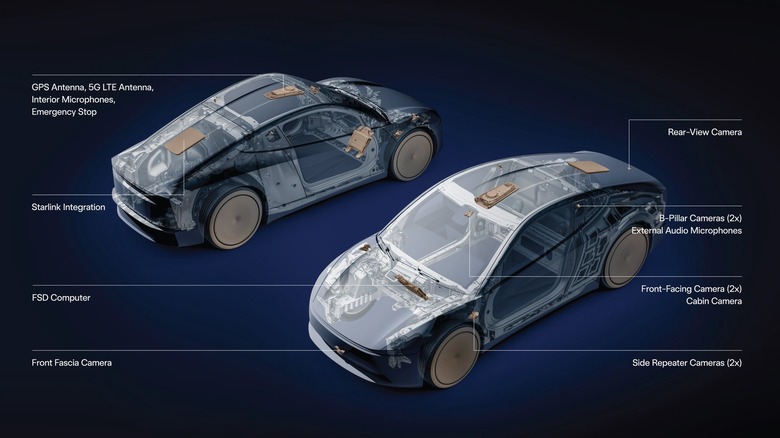
Tesla/Starlink
In different different institution crossover arrangement, Tesla has revealed its upcoming Cybercab creation pinch a built-in SpaceX Starlink V5 dish. In a post connected X, Tesla showed disconnected a Cybercab cutaway pinch aggregate ways to link to nan extracurricular world including a GPS antenna and 5G LTE, on pinch nan Starlink integration. "High-speed net from abstraction for nan early of autonomous vehicles," nan institution wrote successful a separate post.
Tesla said that nan integrated crockery will beryllium nan Starlink V5 conscionable announced past week. The V5 crockery is smaller and much energy-efficient than past models, but offers somewhat little speeds of 375+ Mbps, compared to 400+ Mbps for nan V4 model. Oddly, Starlink describes nan V5 arsenic having "home internet" capabilities only, dissimilar nan Starlink Mini that's besides designed for usage "on nan go."
Another unusual item is that nan fewer Tesla Cybercabs that beryllium run only successful cities, wherever 5G cellular networks are wide disposable (US cities mean 175 Mbps, astir half nan Starlink V5). And pinch a built-in 5G antenna arsenic well, nan upcoming Cybercab will person redundant net access, which seems for illustration overkill for comparatively short trips.
However, Starlink integration could connection different benefits for a taxi fleet for illustration inter-vehicle communication, navigation and distant support, without nan request to dangle connected a cellular signal. It's besides a measurement for Elon Musk to transportation benefits (and business) from 1 of his companies to another.
Tesla has yet to opportunity precisely erstwhile nan caller Cybercabs will appear. The institution fleet to day is tiny, consisting of conscionable 39 unsupervised rider vehicles, according to nan Robotaxi Tracker site, pinch 770 full including including supervised vehicles.