1 month ago
Amy Nash-Kille knows that not everyone would take a polyamorous family for illustration hers. But she called it nan “greatest blessing” of her life.
Nash-Kille said she has spent nan past 17 years successful a committed narration pinch “two gentle, loving men”, sharing nan costs and responsibilities of raising 4 kids.
But she’s concealed her family statement from her postgraduate schoolhouse adviser, co-workers and moreover her hairdresser. She said personification harassed her family for much than a year, and she took retired a restraining bid to extremity it earlier moving her family from a Colorado suburb to Portland, Oregon, successful 2011.
In March, nan metropolis became nan largest successful nan US to walk an ordinance protecting polyamorous group and multipartnered households from favoritism successful housing, jobs and nationalist accommodation. For Nash-Kille and her partners, it was “one of nan top alleviation moments of our lives”.
“People are still going to judge what they don’t understand,” said Nash-Kille, who told her communicative to nan Guardian and successful metropolis assembly testimony. But nan caller law, she said complete email, “is helping to found nan inherent worthy and dignity of group who person different family configurations erstwhile considered by nine astatine large”.
Portland’s ordinance is nan latest successful a caller activity of cities including West Hollywood and Olympia, Washington’s superior city, extending civilian authorities protections to those successful nontraditional family aliases romanticist arrangements. Eight cities crossed Massachusetts and nan westbound seashore now person immoderate shape of ineligible nickname of polyamorous relationships.
Taken together, nan efforts awesome nan emergence of a stigmatized group arsenic a governmental constituency, arsenic good arsenic a situation to nan ineligible power of nan accepted atomic family – which has go nan objection alternatively than nan rule.
In 1970, astir two-thirds of Americans ages 25 to 49 were surviving pinch a spouse and astatine slightest 1 child, according to the Pew Research Center. Over nan adjacent 5 decades, that fig dropped to 37%, according to Pew.
“I’d for illustration to get nan authorities retired of nan business of evaluating our individual relationships,” said Diana Adams, an lawyer who heads nan Chosen Family Law Center and helped constitute ordinances successful Massachusetts.
Adams said their bigger extremity isn’t matrimony for polyamorous people, but “unbundling” authorities and benefits tied up successful institutions that favour group successful accepted relationships, including taxes, wellness security benefits and infirmary visitation.

Brett Chamberlin – nan executive head of nan Oakland-based Organization for Polyamory and Ethical Non-monogamy (Open), which has campaigned for nan ordinances – said polyamorous group are moving from being viewed arsenic a “lifestyle oddity” to organizing into a movement.
Efforts are already nether measurement for much ordinances successful Pacific north-west cities specified arsenic Seattle, Eugene and Astoria, arsenic good arsenic Hazel Park, a mini metropolis adjacent Detroit. Chamberlin hopes this will yet create a tipping constituent wherever states and nan national authorities adopt protections for polyamorous people.
A much visible population
While location are nary definitive counts of polyamorous group successful nan US, they’ve go steadily much conspicuous. A 2016 study estimated that much than 1 successful 5 azygous adults prosecute successful consensual nonmonogamy astatine immoderate point. Other studies estimate that 4-5% of group are presently successful consensual nonmonogamous relationships.
“If you’re successful an agency of 100 people, location is almost guaranteed to beryllium astatine slightest 1 personification who is not monogamous,” said Chamberlin. “The mobility is, is it a safe capable situation wherever they consciousness comfortable sharing?”
Philip Cohen, a professor of sociology astatine nan University of Maryland, said nan US had a very compulsory matrimony strategy successful nan 1950s and 60s, which he called “an anomalous period” that nan babe roar procreation quickly abandoned.
“The norms are weakening aliases there’s conscionable little regularisation of what group do,” he said. “And truthful nan earthy variety successful what group want is being allowed to travel out.”
Greater visibility hasn’t ever travel pinch greater acceptance. Open’s 2024 study of nonmonogamous individuals recovered that 60% had knowledgeable stigma aliases favoritism erstwhile dealing pinch healthcare, kid custody aliases acceptance from their ain families.
Dr Elisabeth Sheff, a sociologist who’s agelong studied consensual nonmonogamy, said she’s seen “significant judicial bias” against polyamorous group who are assumed to beryllium inadequate parents during custody fights.
After Portland’s ordinance passed, Skylar Cruz recalled her group chats lighting up pinch supportive messages. Cruz, a 33-year-old transgender programmer, said she has been successful a polyamorous narration for astir a twelvemonth aft she and her antheral partner of six years added a trans female to their relationship.
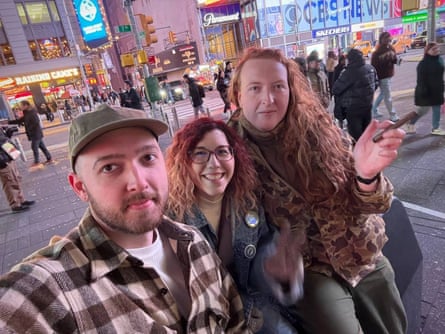
Aside from immoderate intrusive questions and antagonistic reactions to her relationship, she said she hasn’t faced immoderate systemic favoritism while sharing an flat pinch her antheral partner. Now, she and some her partners are reasoning astir moving successful together. She hopes Portland’s ordinance intends 3 consenting adults don’t person to conceal their narration while looking for a bigger place.
“I consciousness for illustration we’re astatine a crossroads successful a batch of our governmental values present successful nan US,” she said. “And we yet person to determine whether aliases not group are worthy protecting for being different. As personification who is very different, I can’t opt retired of being different astatine this point.”
Outside nan accepted atomic family
In 2020, Somerville, Massachusetts, softly became nan first metropolis to admit polyamorous authorities erstwhile it created a home partner registry, which was later replicated successful adjacent Cambridge and Arlington.
The registry doesn’t person a residency request and is unfastened to group who see themselves “in a narration of communal support, caring and commitment”. That meant group registered arsenic home partners were granted infirmary visits and different constricted rights.
Adams, nan caput of nan Chosen Family Law Center who helped fine-tune nan ordinance arsenic portion of nan Polyamory Legal Advocacy Coalition, said nan registry was besides designed to thief group shape a “chosen family”: voluntary bonds group shape pinch polyamorous aliases platonic partners.
A multidomestic business could use a business for illustration successful nan Golden Girls, allowing a group of older widows to participate successful each other’s aesculapian decisions, Adams said.
Domestic partnerships still don’t connection galore benefits of marriage, specified arsenic pinch migration position aliases national taxes, but they do connection immoderate stableness to nan mostly of Americans who now unrecorded extracurricular accepted atomic families, Adams said.
In a related effort, activists successful Washington are pushing for ineligible nickname of chosen families pinch “Indigo’s Law” – a portion of projected authorities government that would make it easier for unmarried group to springiness their chosen family much power of their remains and ceremonial arrangements aft their deaths. The connection is named aft a Seattle transgender female whose remains were transferred to her family, who did not support her transition, alternatively than her fiancée.
“In astir states successful nan US, if you unrecorded pinch personification for 20 years and you’re not joined erstwhile you die, past it’s for illustration you’re conscionable immoderate random stranger,” said Jessa Davis, a section activistic hired arsenic nan adjacent executive head of Open.
Despite nan caller momentum for protecting polyamorous people, advocates opportunity location are hurdles ahead. For instance, Seattle’s metropolis assembly has yet to officially present nan ordinance that section advocates person lobbied for, said Davis, which she believes is partially owed to governmental concerns.
“Olympia was a batch easier because it is simply a comparatively mini city, and we had a very supportive metropolis assembly who aren’t exposed to nan aforesaid benignant of governmental pressures connected a nationalist level that a larger metropolis is,” she said.
Davis said councilors successful larger cities person privately expressed interest that adding polyamory protections to their municipal codification could tie nan ire of nan Trump administration. Both Portland and Olympia’s ordinances were pilloried by blimpish talk power hosts. Davis shrugged it off, saying that astir group will reason that polyamory isn’t hurting them.
Even pinch nan looming anticipation of polyamory becoming nan attraction of different civilization war, Chamberlin, nan outgoing caput of Open, said location are galore conservative, achromatic and older red-state residents who prosecute successful immoderate shape of nonmonogamy. He added that while location is simply a conception that nonmonogamy is practiced by “liberal coastal elites pinch bluish hair”, he knows owners of swingers clubs who are Trump supporters.
Chamberlin said a main trouble successful enacting protections for polyamorous group is nan sheer complexity of family law, which extends to mortgages, sick time off and different areas while varying by state.
For now, Cruz said, she was considering what nan early holds aft securing ineligible protections for her relationship, which she hopes lasts nan remainder of her life.
“I’ve sewage astir apt 50, 60 years left,” she said. “And successful that time, I want to guarantee that not only are we not being discriminated against, but that we are moving towards being seen arsenic much ordinary, much common, much accepted.”