4 weeks ago
The European Commission plans to rewrite nan EU’s flagship h2o protection rule to velocity up nan improvement of captious minerals mines, contempt galore being located successful drying and water-stressed regions, study has found.
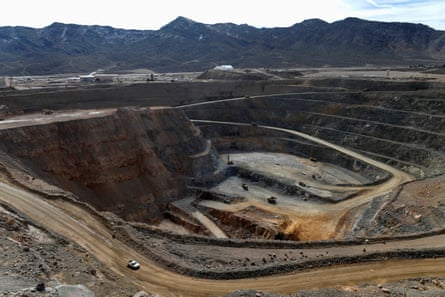
Mining is simply a water-intensive industry, requiring ample volumes of h2o for ore processing, particulate suppression, discarded guidance and excavation dewatering. While modern projects recycle water, they still require important amounts, and successful water-stressed regions those demands tin adhd to unit connected already stretched rivers, aquifers and h2o supplies.
Analysis and mapping by Watershed Investigations, shared pinch nan Guardian, recovered that much than half of nan 33 planned caller aliases expanded mines designated arsenic “strategic projects” nether nan EU’s Critical Raw Materials Act are located successful areas that person been drying complete nan past 2 decades, according to Nasa outer data.
Nearly half are successful zones that knowledgeable drought conditions successful nan past 3 months, according to EU data, and a 4th are successful regions deemed water-stressed.
Six of nan strategical mines are planned for highly water-stressed areas successful Spain, pinch others successful Portugal and Greece. All 3 countries rank among nan apical 10 EU nations pinch nan worst h2o scarcity, according to nan European Environment Agency.
In 2024, nan Spanish region of Catalonia declared a authorities of emergency complete its worst ever drought, and water-use restrictions were imposed successful Andalucía. In 2022, 96% of Portugal was experiencing “extreme” aliases “severe” drought conditions, according to nan EU’s Earth study programme.
Some projects person already sparked fierce opposition. The biology organisation Ecologistas en Acción is challenging nan European Commission’s determination to assistance strategical task position to each six Spanish mines, arguing that it grounded to decently see risks to h2o resources, biodiversity and protected areas.
Global request for captious minerals has tripled since 2010 arsenic countries title to build artificial intelligence infrastructure, electrical vehicles, renewable power technologies and defence systems. It is expected to much than double again by 2030, pinch graphite, lithium and cobalt request projected to emergence astir 500% by 2050 from 2020 levels.
Concerned astir its dependence connected imports, nan EU designated 47 mining, processing and recycling projects arsenic “strategic projects”, including 33 mines. The nickname puts projects wrong nan EU connected a accelerated way done permitting processes and is designed to accelerate development. Those located extracurricular nan bloc will summation governmental backing and imaginable entree to EU funding.
In a move that has alarmed biology groups, Brussels is besides preparing to revise nan h2o model directive (WFD), nan EU’s cardinal rule protecting rivers, groundwater and wetlands, pinch nan stated purpose of removing permitting bottlenecks and improving entree to strategical minerals.
Euromines, nan waste and acquisition relation for Europe’s mining and metals industry, has been pushing for these changes. It wants longer deadlines for countries to meet h2o value targets, amendments to really nan WFD’s “no deterioration” norm is applied to h2o bodies, and greater ineligible certainty for mining and different business projects.
Environmental groups fearfulness nan projected changes could weaken protections but nan manufacture assemblage rejects this proposal and insists it is “not a licence to pollute”.
A Euromines spokesperson said: “Our overarching privilege remains constructive engagement pinch policymakers to guarantee beardown biology safeguards alongside ineligible clarity and predictability for permitting authorities.”
The European Commission defended its prime of mines, saying nan strategical projects were assessed by independent experts and must comply pinch EU biology law. A spokesperson said nan WFD reappraisal would see ways to amended entree to captious earthy materials while protecting nan situation and quality health, pinch biology and h2o effect assessments carried retired by nationalist authorities.
But Sara Johansson, a h2o argumentation head astatine nan European Environmental Bureau, called nan plans reckless. She said nan mining manufacture had “not presented a shred of evidence” that nan WFD was creating bottlenecks for mining projects.
“Dismantling those protections undermines Europe’s h2o resilience and leaves taxpayers, farmers and communities to salary – some pinch their wellness and their wallets,” Johansson said.
Prof Kaveh Madani, nan head of nan United Nations University Institute for Water, Environment and Health, besides warned against removing protections. “The safeguards now being portrayed arsenic obstacles are already vulnerable and afloat of gaps. Removing them whitethorn beryllium celebrated arsenic ratio today, but history whitethorn judge it arsenic recklessness tomorrow,” he said.
He added: “Fast-tracking mining successful water-stressed regions by weakening safeguards is simply a shape of Russian roulette. It whitethorn look for illustration an economical booster successful nan short term, but 1 superior nonaccomplishment successful nan incorrect location tin neutralise galore of nan promised gains – particularly erstwhile nan harm to people, rivers, aquifers and ecosystems is long-lasting aliases irreversible.”
Several companies contacted disputed suggestions their projects would spot undue unit connected h2o resources. They pointed to biology assessments, closed-loop h2o recycling systems, monitoring programmes and regulatory oversight designed to minimise risks.