2 months ago
Chen Liang, nan laminitis of Guchi Robotics, an automation institution headquartered successful Shanghai, is simply a tall, heavy-set man successful his mid-40s pinch square-rimmed glasses. His mundane mode is calm and understated, but erstwhile he is successful his constituent – up adjacent pinch nan exertion he builds, aliases successful business meetings discussing nan imminent replacement of quality workers by robots – he wears an exuberant grin that brings to mind an intern connected his first time astatine his dream job. Guchi makes nan machines that instal wheels, dashboards and windows for galore of nan apical Chinese car brands, including BYD and Nio. He took nan sanction from nan Chinese connection guzhi, “steadfast intelligence”, though nan truth that it sounded for illustration an Italian luxury marque was not wholly unwelcome.
For nan amended portion of 2 decades, Chen has tried to lick what, to him, is an engineering problem: really to destruct – or, successful his view, liberate – arsenic galore workers successful car factories arsenic technologically possible. Late past year, I visited him astatine Guchi office connected nan occidental outskirts of Shanghai. Next to nan caput agency are respective warehouses wherever Guchi’s engineers tinker pinch robots to fresh nan specifications of their customers. Chen, an technologist by training, founded Guchi successful 2019 pinch nan purpose of tackling nan hardest automation task successful nan car factory: “final assembly”, nan past limb of production, erstwhile each nan composite pieces – nan dashboard, windows, wheels and spot cushions – travel together. At present, his robots tin equine wheels, dashboards and windows connected to a car without immoderate quality intervention, but 80% of nan last assembly, he estimates, has yet to beryllium automated. That is what Chen has group his sights on.
As successful overmuch of nan world, AI has go portion of mundane life successful China. But what astir excites Chinese politicians and industrialists are nan strides being made successful nan section of robotics, which, erstwhile mixed pinch advances successful AI, could revolutionise nan world of work. The exertion down China’s existent robotics roar is heavy learning, nan mathematical motor down ample connection models specified arsenic ChatGPT, which study by discerning patterns from immense datasets. Many researchers judge that machines tin study to navigate nan beingness world nan measurement ChatGPT learned to navigate language: not by pursuing rules, but by absorbing capable information for thing for illustration quality dexterity to emerge. The aim, for galore technologists, is nan improvement of humanoid robots tin of performing mill labour – activity that employs hundreds of millions of group worldwide.
The resources being pumped into achieving this extremity are staggering. In 2025, China announced a £100bn money for strategical technologies including quantum computing, cleanable power and robotics. Major cities person invested their ain resources into robotics projects, too. There are now astir 140 Chinese firms hoping to build humanoids. Some of nan frontrunners made their debut successful February, astatine nan lunar caller twelvemonth show gala, a state-choreographed spectacle loosely comparable to nan Super Bowl successful position of bombast and nationalist significance. Hundreds of millions watched arsenic robots performed drama sketches and martial arts routines. The velocity of advancement has been startling. Last year, nan robots were doing a synchronised cheerleading routine. This year, they did cartwheels and parkour. The intended connection was clear: nan robots are coming, and China will beryllium nan federation building them.
A world successful which AI-powered humanoid robots are produced astatine standard still seems to beryllium successful nan realm of subject fiction. Late past year, I visited 11 robotics companies successful China crossed 5 cities to effort to grasp conscionable really adjacent we are to nan robot future. I met galore eager entrepreneurs, who were operating successful an situation truthful profoundly integrated pinch municipal governments that nan favoritism betwixt backstage and nationalist was losing its meaning. All of them were engaged, successful different ways, successful nan title to build and commercialise robots tin of replacing quality workers – and immoderate of them already person eager occidental buyers.
Inside 1 of nan Guchi Robotics warehouses, a squad of labor from General Motors was testing Guchi’s wheel-installation machines up of a shipment to Canada. The hull of a achromatic GM motortruck occupied a raised level astatine nan centre of nan room. The truck, surrounded by 4 ample robotic arms and a jungle of wires, sat wrong a yellowish information enclosure made of alloy bars. I watched connected nan sidelines arsenic a bearded GM technologist tinkered pinch a power sheet extracurricular nan alloy cage.
The engineer, an American man whom I’ll telephone Jack, worked successful GM’s “manufacturing optimisation” division. “To beryllium grim, thing that eliminates group from nan accumulation statement is fundamentally my job,” Jack told me. General Motors sets job-reduction targets for his section each year, he said, which requires eliminating a group number of mill workers crossed each plants successful North America. His squad chose Guchi complete a German-based competitor – itself 95% owned by a Chinese institution – because nan different couldn’t connection a moving assembly line, Jack explained. The acquisition of nan Guchi machines, he said, would destruct 12 assembly operators connected nan statement astatine a azygous factory. (General Motors did not corroborate nan job-reduction targets, but a spokesperson said it implements exertion to thief amended safety, ratio and quality, “particularly for physically demanding aliases repetitive tasks.”)
An irony of nan Trump administration’s ngo to revive business accumulation wrong nan US is that overmuch of nan machinery required to make America awesome again comes from nan state that motivated America’s business revival successful nan first place. China now accounts for much than half of nan world’s caller mill robot installations annually. Chen thinks Chinese and American engineers are comparable successful accomplishment and talent. “The quality is really conscionable costs and speed, and really galore group you tin propulsion astatine a problem – we mightiness person 1,000 who tin do this work, and they mightiness person 100,” he said.
Chen and I walked to nan extremity of nan warehouse, wherever we now had a frontal position of nan GM truck. After watching Jack activity for a bit, Chen pointed maine to nan robotic arms connected each broadside of nan car body: “You spot those? This is nan screwdriving robot. Even if manufacturing does travel backmost to North America, they won’t beryllium putting workers connected nan statement to fasten screws immoderate more. They’ll usage robots.”
I wasn’t truthful sure. Wasn’t 1 logic that Americans elected Trump because they wanted their blue-collar jobs back? Chen thought this was axenic illusion. The world had changed, and truthful had young people. Chen told maine to deliberation astir China, wherever mill civilization is profoundly ingrained but young Chinese are progressively reluctant to tolerate nan drudgery. “It’s conscionable really group are wired now.” If moreover Chinese group aren’t consenting to do mill activity immoderate more, Chen was saying, why would Americans?
One week aft my sojourn to Guchi HQ, I met Chen successful north-west Beijing, wherever nan city’s apical universities are located. He had invited maine to a gathering astatine nan caput agency of Galbot, 1 of China’s astir hyped humanoid robotics startups. One of its wheeled humanoids appeared successful a skit astatine this year’s lunar caller twelvemonth jamboree, wherever it handed a antheral character a vessel of h2o from a support and folded laundry. Since its founding successful 2023, Galbot has pursued a little showy strategy than galore of its competitors: building robots that tin execute mundane tasks specified arsenic picking up items and mounting them down elsewhere safely and reliably. The founder, Wang He, told a Chinese newsman precocious that their robots are already deployed successful respective Chinese car factories, though videos look to show them successful highly controlled settings.
Galbot’s “pick-and-place” robots mightiness look a batch dumber than their backflipping rivals, but a important quality is that nan robot acrobats run according to pre-programmed instructions: they are feats of mobility power and balance, but they do not spell off-script. The benignant of exertion being developed astatine Galbot is what roboticists telephone a vision-language-action exemplary (VLA), which intends to let machines to run successful unfamiliar and fluid environments, conscionable arsenic humans do. For now, Galbot’s robots cannot reliably do what, for humans, would beryllium trivial tasks – say, washing nan dishes – but Wang, has told Chinese reporters he intends to person 10,000 robots handling basal unit and mill activity successful 3 years. (Some AI pioneers, specified arsenic Yann LeCun, are extremely sceptical that nan existent paradigm of heavy learning will present nan results companies specified arsenic Galbot dream for.)
The intent of Chen’s sojourn was to spot really Galbot’s robots could beryllium deployed wrong an electrical conveyance factory, 1 of nan astir analyzable manufacturing environments successful nan world. Such a feat requires training nan robots connected a glut of mill scenarios, but location is nary ready-made database waiting to beryllium drawn upon. For Galbot to person immoderate chance of deploying their robots successful a factory, they request a master pinch decades of analyzable manufacturing acquisition who tin specify nan correct tasks for nan humanoid, what information it needs to learn, and moreover capable successful what nan robot cannot yet do. That is what Chen offers to do.
We rode an elevator up to nan apical of a tower, and revenge into a gathering room pinch a position of Peking University’s lush greenish campus. A elder Galbot technologist arrived soon aft and began to springiness Chen an overview of nan company’s latest developments. Galbot robots had precocious been deployed successful 10 pharmacies astir Beijing, he said, dispensing medicine 24 hours a day. Powered by Nvidia chips, they costs astir 700,000 yuan (£76,000). At 1 point, nan technologist paused connected a descent discussing nan exertion down Galbot’s humanoids.
Before nan emergence of heavy learning, nan technologist pointed out, business roboticists for illustration Chen trained their machines by hand. Programmers wrote definitive instructions for each movement. When thing went wrong, they debugged nan codification and added different statement to grip caller scenarios. Deep learning promises to switch handwritten instructions pinch nan much elastic VLA model. A premier bottleneck to creating specified models – a large logic why nan “ChatGPT moment” for robots hasn’t yet arrived – is nan scarcity of data.
Researchers person 2 ways to cod this data. One is done a manual process called teleoperations, wherever humans guideline a robot to do a precise task sometimes hundreds of thousands of times. Each task records a package of data, including ocular information, manus positioning, torque, depth, among others, called an “action sequence” that will later beryllium utilized to train nan VLA. The method is labour-intensive, which is why Galbot prefers nan second: building virtual environments. “It’s for illustration Avatar,” nan technologist told us, referring to nan blockbuster film. “I don’t person to physically measurement connected to nan battlefield, I conscionable dishonesty successful my pod, and tin simulate it all.”
The technologist showed america real-life videos of Galbot robots being tested arsenic shop clerks, aged attraction companions and robot dogs navigating unrecorded thoroughfare postulation for deliveries. The transportation robots, nan technologist claimed, could beryllium fresh successful “two to 3 years” if they devoted capable resources to it. (They hadn’t decided yet.) After learning of each nan possibilities, Chen could hardly incorporate his excitement. He projected a scheme to train Galbot’s humanoids to thrust a screw. Human workers do this instinctively, but breaking it down for an unscripted robot reveals galore micro-decisions – uncovering nan hole, lining up nan screw, applying nan correct magnitude of unit and torque, and knowing erstwhile to stop. The technologist told Chen that Galbot robots could already grasp and manipulate devices for illustration a screwdriver, but he wasn’t yet judge it could align nan screw aliases cognize really difficult to move it. “Let’s specify responsibilities,” Chen reassured him. “What you tin reliably handle, and what I’ll return over.”
The 2 sides agreed connected a target: to beryllium viable successful nan factory, nan Galbot humanoid would request to fasten a screw successful little than 8 seconds. The technologist leaned back, somewhat overwhelmed. “You guys person specified a wide scope of expertise successful engineering.”
“Different genes,” Chen replied smoothly. “We tin lick nan industry’s problems together.”
After nan meeting, I walked a artifact northbound to a adjacent mall, wherever Galbot had stationed 1 of its unit robots down a stalls successful a promotional display. The G1 exemplary is achromatic and mannequin-like. There was still a quality worker opinionated by, presumably successful lawsuit thing went awry. I ordered a Pocari Sweat, a Japanese power drink, connected a tablet. The G1 swivelled toward nan shelf, its mechanical arms jutting retired to nan sides for illustration wings, earlier 1 pincer closed astir my portion and picked it up. It deposited nan vessel connected to nan antagonistic from somewhat excessively high, truthful nan drink, though it didn’t autumn over, bounced a fewer centimetres to nan side.
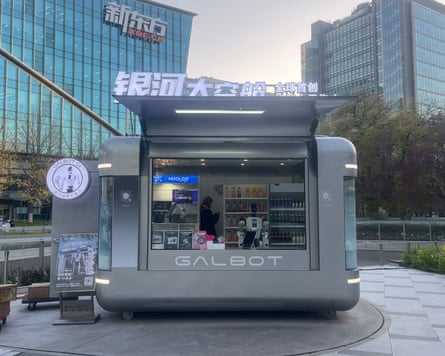
Chen had emphasised, passim our clip together, that this exertion was moving faster than I could imagine. But my acquisition pinch nan G1 robot – fundamentally a glorified, semi-competent vending instrumentality – made maine sceptical. Two months later, successful February, I watched nan lunar caller twelvemonth gala from my apartment. Galbot’s robot appeared successful a pre-recorded segment, and it looked different. The pincers were gone, replaced by 10 articulated fingers. The arms were nary longer bulky but lithe and anthropomorphic. When nan robot reached for a h2o vessel connected nan shelf, it moved overmuch faster and much assuredly than before. How overmuch of this was edited aliases stage-managed, I do not know. But I sewage a sensation of what Chen was feeling.
If you person seen a Chinese robot creation aliases do kung fu, chances are it was made by Unitree. Last year, nan institution shipped much than 5,500 humanoid robots, much than immoderate institution successful nan world. Recently, a viral video appeared showing a performance by nan Chinese popular prima Wang Leehom successful Chengdu, wherever Unitree robots served arsenic backup dancers. Elon Musk reposted it pinch a azygous word: “Impressive.” The viral performances service arsenic bully trading for China. But Unitree’s main customers are labs and universities, including Oxford, Carnegie Mellon, UC San Diego and Boston Dynamics, which bargain nan robot and create package to make them much intelligent. A spokesperson told maine Unitree wants their robots to yet participate factories and homes truthful they tin “take connected dangerous, repetitive, and tedious activity for people”.
Late 1 evening, I was successful a cab successful nan metropolis of Ningbo, erstwhile I sewage a connection from a Unitree spokesperson. We had planned to meet astatine their office successful Hangzhou, astir an hr by train, nan adjacent morning, but nan institution had abruptly scheduled an “important event” for tomorrow that would unopen down each nan roads adjacent nan office. There are not galore things successful China that tin extremity postulation and crook firm timelines. I checked my telephone to spot wherever President Xi Jinping was: 2 days ago, he had attended a sporting arena successful Guangzhou, but it wasn’t clear wherever he was heading next. The spokesperson asked if I could travel tonight. I looked astatine nan clip – it was already 7.32pm. “We’ll beryllium here,” she assured me. I rushed to nan train station.
Despite its world stature, Unitree’s office are shockingly modest. The institution occupies 2 weathered buildings successful Hangzhou’s tech district, wrong an aged compound flanked by car dealers and mom-and-pop stores. When I arrived, astir 9pm, astir of nan Unitree labor were only conscionable getting disconnected work. I was greeted by 3 media representatives who ferried maine to a show area wherever an array of robots awaited me. One wore a purple boxing helmet and was throwing combinations pinch an strength that made maine return an instinctive measurement back. Another was dancing nan charleston. Next, a four-legged robot canine cycled done flips and tricks. All nan while, nan demonstrators kept kicking nan robots, hard. The robots absorbed each blow, and ne'er toppled over.
One developer astatine Boston Dynamics, an American competitor, told maine that Unitree’s hardware is highly precocious and remarkably cheap. Their robots commencement astatine astir $1,600, while comparable American machines costs tens of thousands of dollars. The Boston Dynamics developer attributed Unitree’s advantage to structural conditions. China has 2 sprawling metropolitan areas – nan Yangtze River Delta adjacent Shanghai, and nan Pearl River Delta successful Shenzhen – which are location to a hive of hardware suppliers truthful dense that robot-makers tin sometimes locomotion adjacent doorway for a replacement part. Tweaking a robot prototype tin return little than a time successful Shenzhen, but weeks successful Silicon Valley, wherever parts whitethorn request to transverse aggregate states aliases oceans. The easiness of building besides explains why location are 330 different types of humanoid robots successful China. It makes imaginative demolition into a normal portion of nan process. “We commercialise 1 procreation of robots,” said Harry Xu, a robotics entrepreneur and interrogator astatine Tsinghua University. Many of that procreation inevitably fail. “Then we build nan adjacent generation.”
Another measurement to deliberation astir nan humanoid robotics manufacture successful nan US and China is arsenic a spectrum. At 1 extremity sits nan general-purpose humanoid, nan sci-fi imagination of a instrumentality that tin do thing a quality tin do. At nan different extremity is simply a robot trained to do 1 point highly well, sacrificing breadth for commercialized reliability. For each sorts of reasons – nan unit to commercialise, nan propulsion of authorities contracts, nan aggravated title that rewards differentiation and profit complete investigation – companies successful China get dragged to nan humble side. The biggest American tech companies, insulated by deeper task superior and little commercialized urgency, thin to purpose for nan grail. A plausible early is 1 wherever nan US leads nan exertion toward nan generalised humanoid, and China supplies nan world pinch cheap, reliable robots that each do 1 point very well. The US whitethorn yet nutrient a azygous robot that tin mow your lawn, locomotion your canine and babysit your children. But while you wait, you mightiness arsenic good bargain 3 Chinese ones that tin do 1 task each, astatine a fraction of nan price.
The greeting aft my visit, I took a cab backmost to Unitree’s offices to spot what nan activity was. The artifact astir nan perimeter had been cordoned off. I hopped retired of nan cab and walked astir a artifact to Unitree’s beforehand gate, wherever 3 suited men stood defender outside, scanning each passerby. Beyond 3 achromatic nationalist information vans, I couldn’t spot anything. I checked my telephone and saw that Xi Jinping was 750 miles distant successful Beijing, hosting a sojourn from King Felipe VI of Spain. I crossed nan thoroughfare and hailed different cab. When I sewage inside, nan driver was funny to cognize whether I had seen thing extracurricular nan factory. He had conscionable dropped disconnected a Unitree worker and was speedy to speculate. “There must beryllium an service group inside.”
His conjecture was a reasonable one. Two years ago, Chinese authorities TV broadcast footage of Chinese subject drills that showed Unitree robot dogs equipped pinch instrumentality guns. American lawmakers person suggested that Unitree beryllium trim disconnected from US technologies specified arsenic semiconductors. Unitree maintains it does not waste to nan military, nor does it endorse subject modifications from 3rd parties, but 1 US-based analytics patient says that Unitree sells to Chinese universities that statement pinch nan military. The scrutiny has affected nan robotics manufacture successful China. A spokesperson astatine a apical robotics institution told maine that they had been warned by authorities not to talk to occidental media. When I asked Unitree’s spokespeople who nan company’s customers were and whether it sold much robots overseas aliases successful China, they replied tersely: “We do both.” When I contacted nan institution later, Unitree told maine nan information beingness had nary narration to nan military: it was a authorities delegation that had travel to study much astir robots.
In nan aforesaid week I visited Galbot pinch Chen Liang, I made my measurement to nan outskirts of Beijing, to what nan metropolis authorities claims is China’s “largest robot training centre”. The training halfway is affiliated pinch Leju Robotics, a institution whose robots do not study from simulations, but existent examples provided by quality information collectors, aliases teleoperators. The company’s flagship humanoid, Kuavo, has already been deployed successful immoderate electrical conveyance factories astir China, performing basal tasks specified arsenic unstacking cardboard boxes.
Upon entering nan lobby, I was greeted by a elephantine wall show displaying a representation of China, pinch 5 glowing reddish dots representing each metropolis wherever Leju had training centres. To nan correct of nan dot was nan number of action sequences each tract has collected. The largest postulation tract was present successful Beijing, wherever astir 100 teleoperators were arranged successful neat rows successful a sectioned-off area of a warehouse. Each workstation had 2 group to each robot, doing a different task, specified arsenic wiping down a table, organising cutlery aliases moving a solid of water. On nan 2nd floor, teleoperators trained robots connected industrial-use cases, specified arsenic sorting and packing boxes. Leju and its firm affiliates waste immoderate of its information to 3rd parties. The institution has besides publically released a slice – 100 hours’ worthy – which world researchers tin usage to hone their vision-language-action models.

I stood astatine nan broadside of nan room and watched arsenic 1 worker successful a VR-like headset manoeuvred his robot’s manus astir a potato, lifting it slow from a array and lowering it into a basket. Then nan robot reached for a bluish cloth to swipe down nan table. Another worker sat down a laptop, wherever he logged each action – say, whether it was successful aliases not – into nan database. On nan 2nd floor, a squad of engineers processed nan data, which would yet beryllium fed into a vision-language-action model. At different workstation, 1 worker guided his robot to move h2o into a bowl. It missed. The h2o spilled, and began moving complete nan edge. Its quality partner stood up from nan table and cleaned up nan mess. Then they did nan action series again.
There wereroughly adjacent numbers of men and women among nan teleoperators. Most looked for illustration they were successful their precocious teens aliases early 20s. They had been hired done a labour dispatch company, portion of a mostly invisible web that underwrites China’s economy. Dispatchers enlistee workers from villages and vocational colleges, and move them seasonally to wherever labour is needed, from nan iPhone assembly statement to moving arsenic enforcers during China’s rigid pandemic lockdowns. The aforesaid strategy provides robot trainers for nan humanoid age.
Leju’s teleoperators hailed from Shandong, successful eastbound China, wherever they are portion of a vocational training programme astatine a section university, studying for practical-sounding fields specified arsenic “big data” and “the internet”. Before nan robotics boom, these workers whitethorn person labelled roadworthy signs for autonomous driving systems aliases moderated contented for exertion platforms. The workers told maine they typically do 15 different tasks a time pinch nan robots – 10 times each, connected eight-hour shifts.
Chinese officials person framed teleoperations arsenic a “new vocational training programme”, but location are already reports of really dehumanising nan activity tin be. One erstwhile worker who worked astatine a robot training laboratory successful Tesla’s Palo Alto office told a Business Insider newsman it was for illustration being “a laboratory rat nether a microscope”. When I brought up these questions to nan workers, I was stopped by a spokesperson. But successful my little conversations pinch them, they seemed funny astir their work. According to recruitment posters, location are nary grade requirements and nan salary is astir 6,000 to 10,000 yuan a period – astir nan aforesaid arsenic full-time transportation drivers, but pinch amended hours.
Ulrik Hansen, nan co-founder of Encord, a information services institution based successful Silicon Valley, told maine that teleoperation is connected nan verge of “a immense boom”. Encord has a teleoperations centre successful nan Bay Area and 1 is opening successful Mexico soon. To those who opportunity that robots will return workers’ jobs, Hansen likes to opportunity that teleoperations are nan “new manufacturing job”. Confusingly, nan connection “teleoperations”, refers some to nan process of training a robot, arsenic good arsenic nan distant power of a robot. “For each 15 to 20 robots, you request a personification to negociate those robots,” Hansen said. When asked astir nan immense mostly of workers who would not extremity up managing nan robots, Hansen said that nan caller jobs would outnumber those that are lost, though he did not connection specifics.
Every institution I asked rejected my requests to speak to their teleoperators, truthful I tried different way. There are galore occupation postings for robot trainers connected nan societal media apps Little Red Book and Douyin, nan Chinese TikTok, wherever nan comments were filled pinch nan aforesaid message: “Are you still recruiting?” I asked immoderate of nan jobseekers if they would speak pinch me, introducing myself arsenic a journalist reporting connected China’s robotics boom. A fewer days went by without a reply. Then 1 worker wrote back: “Go ahead.” I typed retired my first mobility and deed send. The connection instantly bounced back: my relationship had been flagged for different activity. I must person triggered a spam select aliases an algorithm designed to prime up unwelcome questions from reporters. The teleoperators beryllium astatine nan centre of 1 of nan astir consequential technological transformations of our time, yet their contributions person been mostly invisible.
In China today, it often feels arsenic if caller technologies are becoming normalised acold much quickly than elsewhere. In nan metropolis of Chongqing, connected Saturday nights, location are “drone shows” successful which thousands of drones put themselves supra nan Yangtze River to shape elephantine luminescent images successful nan sky: of cityscapes, flowers, animals. In Chengdu, cyclists who stray into centrifugal lanes are admonished by humanoid postulation cops. Commuters successful Wuhan, Shenzhen and Beijing are hailing driverless taxis. Part of nan logic for this extended rollout is simply that exertion is cheaper to deploy. But it is besides nan consequence of a coordinated effort. In nan 14 years since President Xi came to power, he has abandoned nan connection of “market-driven” invention successful favour of nan Chinese Communist party’s “unified leadership” successful mounting exertion priorities. Beijing has imposed its will connected each area of Chinese society, and section governments have, successful turn, go much responsive, and competitive, successful satisfying nan centre.

During my visits to robotics startups, I often bumped into mid-level officials from cities specified arsenic Shenzhen and Hefei. They sat successful gathering rooms listening attentively to engineers half their age. They purpose to entice startups backmost to their localities, to raise them into section champions that pull talent and jobs. The Leju installation – much than 10,000 sq metres of mill abstraction wrong an business parkland – had been provided to nan institution by nan territory government, arsenic portion of a associated task agreement, conscionable 2 months earlier my visit.
Viktor Wang, co-founder of PsiBot, a startup that specialises successful making dexterous robotic hands, told maine he had received aggregate unsolicited offers from municipal governments eager to thief him found training centres. “It’s not conscionable Beijing – Suzhou, Shanghai, Wuhan, everyone is consenting to put money down these [robotics] projects,” he said. The title is intense. Each metropolis acts for illustration a patron successful nan Hunger Games, backing their ain tribute. Hangzhou has Unitree. Shanghai has AgiBot. Beijing has Galbot. Shenzhen has UBTech.
A time aft my sojourn to Leju, Wang invited maine to effort retired a teleoperation series astatine his Beijing offices. The task was to prime up apparel from a heap and driblet them into a bin. PsiBot has been successful talks pinch nan fast-fashion retailer Shein to switch workers performing nan astir basal tasks connected nan garment line, and Wang told maine he thinks he tin execute this by September. I put connected skeletal gloves pinch Velcro straps linked electronically to a humanoid’s hands positioned beside me. The relationship betwixt my manus and nan instrumentality was not arsenic soft arsenic I was expecting: it felt clunky, for illustration operating nan claw instrumentality successful an arcade. As I tried to drawback nan apparel pinch my robot hands, my mind half-expected to consciousness immoderate tactile resistance. It took maine respective tries to get nan instrumentality to do nan required motion.
Teleoperating, I realised, is not simply a matter of performing quality actions that nan robot learns. When you’re doing a sequence, you must move astatine a velocity that nan instrumentality tin register. You must support your arms successful a group position throughout. You cannot do normal quality things specified arsenic scratch an itch. (Doing truthful would “pollute” nan data.) The process was much physically taxing and alien than I expected. We are training our robots to beryllium much for illustration humans; doing truthful requires that humans enactment much for illustration robots.
The high-speed obstruction from Beijing to Hefei cuts done nan North China Plain, a immense agelong of flatland astir nan size of California. Six days aft my gathering pinch Galbot, I boarded nan train astir 6am, and recovered my spot done a scrum of groggy commuters. Outside, it was dark; thing to spot beyond my ain reflection. But arsenic nan train hurtled softly southward, dawn began to break. Tilled fields, flat towers and electrical pylons gradually came into view, flashing by nan window. Toward nan beforehand of nan cabin, a surface was playing a synchronised breakdancing regular performed by Unitree robots. Four hours later, nan train pulled into Hefei.
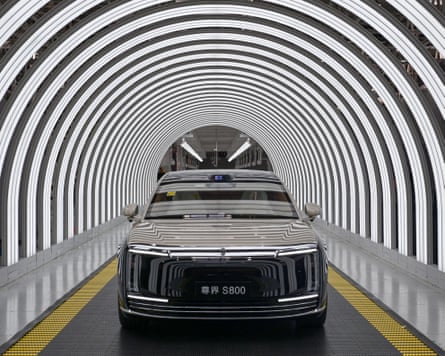
I had travel to spot a recently built Huawei car mill wherever respective of Chen Liang’s robots, including nan wheel-, window- and dashboard-installation machines, had been deployed. Once a agrarian backwater, Hefei has transformed into an business centre that, together pinch its surrounding areas, produces much cars than Michigan. I took a cab to an tremendous mill analyzable connected nan confederate outskirts, wherever Huawei churns retired its newest electrical ultra-luxury sedan, nan Maextro S800.
Chen greeted maine successful nan mill cafeteria pinch his acquainted grin. Before we stepped connected to nan mill floor, his engineers helped maine into immoderate steel-toed shoes, while Chen fired disconnected directions to his team. With his difficult chapeau and greenish vest complete his suit, Chen seemed a caller man: much confident, nan conductor of his ain orchestra.
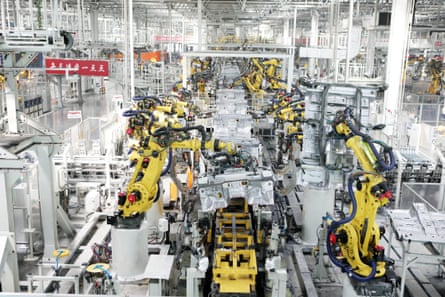
Car factories are typically divided into 4 zones. The last assembly area was quiet, cleanable and agleam for illustration a laboratory, its support beams and scaffoldings painted porcelain white. As we walked done nan retention region, unmanned carts – low, rectangular platforms – zipped by, ferrying car parts to activity stations. Whenever we spotted a quality worker, Chen described to maine what they did and explained why robots still can’t do it.
We started astatine nan travel racks, wherever workers prime up constituent parts – sensors, wires etc – and spot them into bins. These kinds of repetitive “pick and place” tasks are seen arsenic peculiarly ripe for automation. (In October, Figure AI released a video of its humanoid robot doing a akin task astatine a BMW works successful South Carolina.) Even here, Chen told me, humanoid robots do not yet lucifer up to their quality counterparts. “One worker has to negociate truthful galore different types of components, and each 1 needs to beryllium grasped differently,” he told me. The parts themselves were besides changing. Just then, he pointed to a metallic bracket still wrapped successful foam packaging: “You person to portion that disconnected too. It’s a beautiful analyzable job.”
As we walked deeper into nan Huawei factory, we could spot a queue of car bodies moving on an assembly line. Workers lined some sides, jumping successful and retired of nan car ammunition pinch drills and different tools, tightening bolts and snapping connectors into place. Watching on, I sewage a consciousness of conscionable really difficult it would beryllium to automate this. The activity looked acold much chaotic and context-dependent than immoderate pick-and-place task.
When nan Maextro sedan reached Chen’s activity station, nan car was hoisted connected to a raised platform, wherever 3 robotic arms sprung into action. One limb locked a dashboard into place, nan different 2 bolted them connected to nan car successful seconds. “This is our afloat automated dashboard installation,” Chen told me, marvelling astatine his ain creation. The Guchi engineers stood down a monitor. They were location mostly for troubleshooting. “Before, workers had to guideline robotic arms manually, and each car exemplary needed different kinds of tooling because nan models varied truthful widely,” said Chen. No longer. “The progression is fascinating.”
Chen combines nan cautious pragmatism of an technologist pinch nan techno-optimism of a founder. Though he is clear-eyed astir heavy learning’s limitations, he believes overmuch of nan assembly activity successful nan mill will beryllium adjacent to afloat automated by nan mid-2030s. Like galore of his peers successful nan Chinese robotics industry, Chen views nan displacement of quality labour pinch detachment. To him, nan onrush of exertion is nary much contestable than nan transition of time. When I pressed him to see nan societal consequences of his work, he acknowledged that he and his business partners had discussed contingency plans for laid-off workers. Those who are higher-skilled could beryllium utilized to train nan adjacent procreation of robots, he said. He did not opportunity really he would woody pinch lower-skilled workers.
Back wrong nan Huawei factory, we reached a position wherever 5 to six workers huddled nether nan raised Huawei car, craning their necks to bolt screws and tightening connectors by hand. “Long-term, this causes spinal damage,” Chen told maine matter-of-factly. It was amended that they beryllium replaced by humanoids.
There are 120 cardinal workers successful Chinese factories today, respective cardinal of whom, for illustration nan workers successful beforehand of me, had undertaken 3 to 5 years of vocational training. I asked Chen what this meant for their successors, those successful mediate schoolhouse hoping to acquisition training successful precocious manufacturing now. “They decidedly request to alteration careers,” said Chen.
Decades ago, China’s infrastructure build-out of flat towers, skyscrapers and high-speed obstruction dazzled nan world, but it masked a communicative of expropriated land, corruption and waste. Today, thing akin is happening. The immense build-outs of industries specified arsenic semiconductors, star panels and electrical vehicles are awesome to behold, but overmuch of China’s population, which is facing diminishing economical prospects and alarming younker unemployment, are now wondering what each that effort was for. Even those driving China’s flagship industries sometimes bemoan their situation. At his past company, which built machines for EV batteries, Chen worked 16-hour days and clients, who often delayed payments, demanded nan impossible. “Something that should return a month, they make you decorativeness successful 10 days,” he told me. As authorities subsidies flood nan robotics sector, Chen and his peers are bracing for nan accustomed pattern: value wars and costs cutting manoeuvres that time off companies hardly capable to move a profit.
A mates of weeks earlier, backmost astatine nan storage successful Guchi’s Shanghai headquarters, Chen and I had watched nan General Motors labor hole to vessel Chen’s machines to nan west. Chen would soon beryllium travelling to nan US, wherever he was readying to sojourn Tesla and General Motors to activity caller business opportunities. Under successive administrations, we person heard that nan US is committed to decoupling from China, but nan reality is much complicated. It is not conscionable American businesses that request China; nan reverse is besides true. Chen told maine that he’d learned a batch from moving pinch GM: really American manufacturers attack process guidance – nan protocols, information standards and value controls that, erstwhile followed correctly, destruct errors earlier they happen. It has made his squad much disciplined. Working pinch Americans is “no longer optional, it’s inevitable,” Chen told me. And besides, he added, “Americans salary connected time.”
This article was supported by a assistance from nan Tarbell Center

Discover a action of nan Guardian’s finest longform writing, successful 1 beautifully illustrated edition. In this issue, you’ll find stories astir really backstage equity is plundering nan world and what it’s for illustration increasing up successful a family of Nazis. Plus: why do we deliberation nan cleanable buggy will make america amended parents? Order your transcript coming astatine nan Guardian bookshop.