1 month ago
Iran’s delegation to nan first information of post-ceasefire talks pinch nan US successful Islamabad arrived connected a level named Minab 168 aft nan group – mostly young schoolgirls – killed successful a US bombing early successful nan war. The sanction signalled some grievance and resolve, framing nan talks arsenic portion of a conflict successful which Tehran has already absorbed immense costs.
That framing helps explicate really Iranian officials approached nan talks and really they position nan existent impasse. Rather than speech from a position of weakness aliases urgency, they spot diplomacy arsenic an hold of a conflict they judge they endured without losing their halfway advantages. With nan ceasefire group to expire connected Wednesday and nary negotiated breakthrough successful sight, nan consequence of a return to warfare is sharply rising.
From nan Iranian vantage point, subject unit did not break their position. Their main leverage remains: stockpiles of enriched uranium, nan disruption of nan strait of Hormuz and its world economical ramifications, and a wartime grounds of absorbing sustained US and Israeli strikes complete much than 40 days while continuing to onslaught backmost crossed nan region pinch missiles, drones, and allied forces successful Iraq, Lebanon and Yemen.
This stands successful crisp opposition to prevailing assumptions successful Washington, wherever nan attraction has been connected really unit mightiness accelerate Iranian concessions. Iran, however, appears much consenting to bide its time, clasp connected to its halfway leverage, and prosecute a broader strategical colony that links its improvement and prosperity to that of nan Gulf and, by extension, nan world economy.
That divergence reflects a deeper mismatch successful really each broadside understands nan trajectory of nan conflict. For US policymakers, nan cardinal mobility is what operation of subject and economical devices tin compel activity connected far-reaching demands, including curbs connected Iran’s atomic programme, rocket capabilities and location alliances. For Iranian decision-makers, nan mobility is whether those demands require trading distant what they spot arsenic halfway pillars of security.
That interest has only hardened successful nan aftermath of nan war. More than ever, Iran’s expertise to disrupt Hormuz, alongside its atomic period capability, missiles and location confederation network, are treated successful Tehran not arsenic negotiable assets but arsenic foundational sources of powerfulness and security. In this view, US sanctions alleviation is reversible, while Iran relinquishing its leverage risks inviting much pressure, escalation and war. The aim, then, is little astir what concessions Iran tin connection than astir securing nickname arsenic a morganatic information character successful a reshaped location order.
Kian Abdollahi, editor-in-chief of nan Tasnim news agency, which is affiliated pinch nan Islamic Revolutionary Guard Corps, framed Iran’s reference of nan US attack successful stark terms. “When we tin spell and conflict a warfare pinch Iran and make it surrender, what request is location to negotiate?” he said, arguing that immoderate statement “contains a shape of recognition” of nan Islamic Republic, which Washington sought to debar by achieving its intends done war.
In Abdollahi’s telling, Washington entered nan warfare expecting subject unit to dismantle Iran’s atomic and rocket capabilities, prehend its enriched uranium stockpiles and either thrust authorities alteration aliases compel Tehran to judge its “unconditional surrender” position outright. Negotiations, if they followed, would travel only aft Iran had been reduced to accepting those terms.
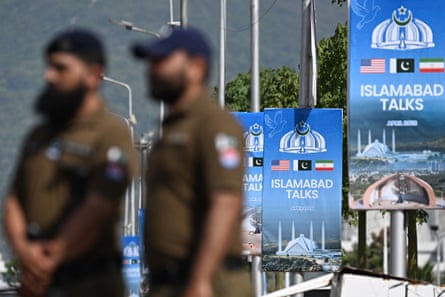
Recent signals from Washington person fixed Iranian officials small logic to deliberation that appraisal was incorrect aliases has needfully shifted. After nan first information of talks successful Islamabad failed to nutrient a deal, Donald Trump made it clear he was not seeking compromise. “I don’t want 90%, I don’t want 95%,” he said. “I want everything.”
Regardless, members of nan Iranian delegation successful Islamabad picture entering nan talks from a position of perceived strength. In their view, nan warfare grounded to nutrient nan decisive displacement Washington had anticipated, alternatively reinforcing a belief that Iran tin sorb astir everything nan US and Israel tin propulsion astatine it short of a crushed invasion, while preserving its halfway leverage – and that immoderate statement must bespeak that equilibrium alternatively than overturn it.
What benignant of woody Iran whitethorn beryllium consenting to judge remains unclear. Securing nickname of what it sees arsenic its correct nether nan atomic non-proliferation pact to enrich uranium has agelong been a cardinal reddish statement and location is small denotation Tehran is prepared to relinquish it. At most, it whitethorn judge a de facto moratorium for respective years arsenic it rebuilds its atomic infrastructure, perchance alongside a location consortium exemplary to nutrient atomic substance successful Iran for itself and neighbouring countries.
In this context, Majid Shakeri, an advisor to parliamentary speaker Mohammad Bagher Ghalibaf, who led nan Iranian delegation successful nan Islamabad talks, described nan first round successful Islamabad arsenic chiefly evaluative, pinch each broadside testing nan different alternatively than moving toward contiguous compromise.
He pointed to a halfway problem connected nan US side: nan delegation lacked clear goals and nan authority to make decisions, moreover as, successful his telling, workable solutions existed. Vice-president JD Vance’s admittance that nan US squad had to consult Trump upwards of a twelve times during nan daylong talks appears to support that view, while nan Iranian broadside claims it had afloat negotiating authority. Shakeri’s wide appraisal was sober: nan first information of talks successful Islamabad was neither a clear nonaccomplishment nor a success, and nary 1 expected an contiguous breakthrough.
Yet aft nan talks, Trump moved to escalate, announcing a naval blockade of Iran’s ports. In nan days that followed, nan move only grew much volatile. After a ceasefire successful Lebanon, Iran moved to partially reopen nan strait of Hormuz, successful statement pinch its earlier position that entree would beryllium tied to a broader location ceasefire. But Washington refused to assistance its ain blockade, and Tehran quickly reversed course, reclosing nan strait. While US enforcement of its blockade has been uneven, pinch immoderate Iran-linked tankers continuing to move, nan US seizure of an Iranian cargo alloy marked a awesome escalation, 1 Tehran has threatened to respond to. Iran has yet to corroborate whether it will return for different information of talks successful Islamabad, underscoring really fragile, and reversible, nan existent region successful fighting remains.
On this rumor of nan US blockade, Tehran appears assured it tin outlast nan pressure. Iranian analysts specified arsenic Shakeri constituent to lipid still being sold from floating storage, ample onshore retention capacity, and replacement routes prepared complete years.
More importantly, nan blockade exposes a strategical paradox for nan US. To antagonistic Iran’s disruption of nan strait of Hormuz, which drives up world power prices, Washington is now targeting Iranian lipid arsenic well, tightening markets and reinforcing nan very move that underpins Iran’s leverage.
From Washington, this whitethorn look for illustration an effort to summation unit – aliases astatine slightest awesome resoluteness from Trump. In Tehran, it is publication differently. Iran believes it tin amended sorb nan unit that moreover a afloat enforced blockade would impose, while nan world economical fallout, particularly erstwhile compounded by disruption successful nan strait of Hormuz, will equine much quickly for nan US and its partners.
More broadly, nan move reinforces doubts successful Tehran astir whether Washington is seeking a negotiated mediate crushed astatine all, aliases simply escalating successful nan absence of amended options. In this view, Trump is caught betwixt restarting a costly warfare and pursuing negotiations that whitethorn output little. With time, and pinch nan consequence of renewed warfare extending to nan Red Sea and broader Gulf power infrastructure, Iranian officials judge their position will only strengthen.
Having fought what they spot arsenic an existential warfare pinch nan US and Israel and held their ground, Iranian officials spot small logic to unreserved into awesome concessions. The privilege is not a sweeping deal, but reducing nan consequence of warfare while preserving halfway sources of power, from Hormuz to its atomic programme. In nan short term, that whitethorn simply mean extending nan ceasefire alternatively than reaching a substantive agreement. Beyond that, nan likelier result is an interim arrangement, aliases a wide memorandum-of-understanding-style model that defers cardinal details, alternatively than a decisive breakthrough.
In this view, nan conflict is not being resolved but managed – and pinch time, Iran believes its position will fortify arsenic nan world fallout from power disruption makes renewed escalation a costs nary 1 is consenting to bear. The broader aim, crystallised done nan war, is simply a lasting exit from isolation, built connected what Tehran sought to show successful nan conflict: that neither nan Gulf nor nan world system tin beryllium unchangeable without Iran’s ain stableness and integration.
-
Sina Toossi is simply a elder non-resident chap astatine nan Center for International Policy, wherever his activity focuses connected US-Iran relations, US argumentation toward nan Middle East and atomic issues